Essential Planning Checklist
Proper pre-project planning ensures a smooth installation and long-term roofing performance:
- Assessment: Professional evaluation to determine repair vs. full replacement needs.
- System Approach: Addressing underlayment, decking, flashing, and ventilation as one complete system.
- Material Selection: Matching material characteristics with weather exposure, property design, and budget.
Start With the Condition of the Existing Roof
Before planning a roof replacement, it is useful to understand what is happening with the current roofing system. Signs such as recurring leaks, damaged materials, deteriorating flashing, or areas of moisture can indicate that the roof needs more than routine maintenance.
A professional assessment can help determine whether the existing system can be repaired or whether replacement is the more practical option.
System Evaluation
Identifies hidden deck moisture and failing structural components.
Material Compatibility
Selects materials tuned to local regional climate factors.
Long-Term Value
Reduces recurring repair cycles and boosts property resilience.
Consider the Entire Roofing System
The roofing material is only one part of the project. Underlayment, flashing, ventilation, drainage, and the roof deck can all affect long-term performance.
This is especially important when replacing an older roof. Existing components may have deteriorated at different rates, so simply installing new surface materials may not address every underlying concern.
Choose Materials Based on the Property
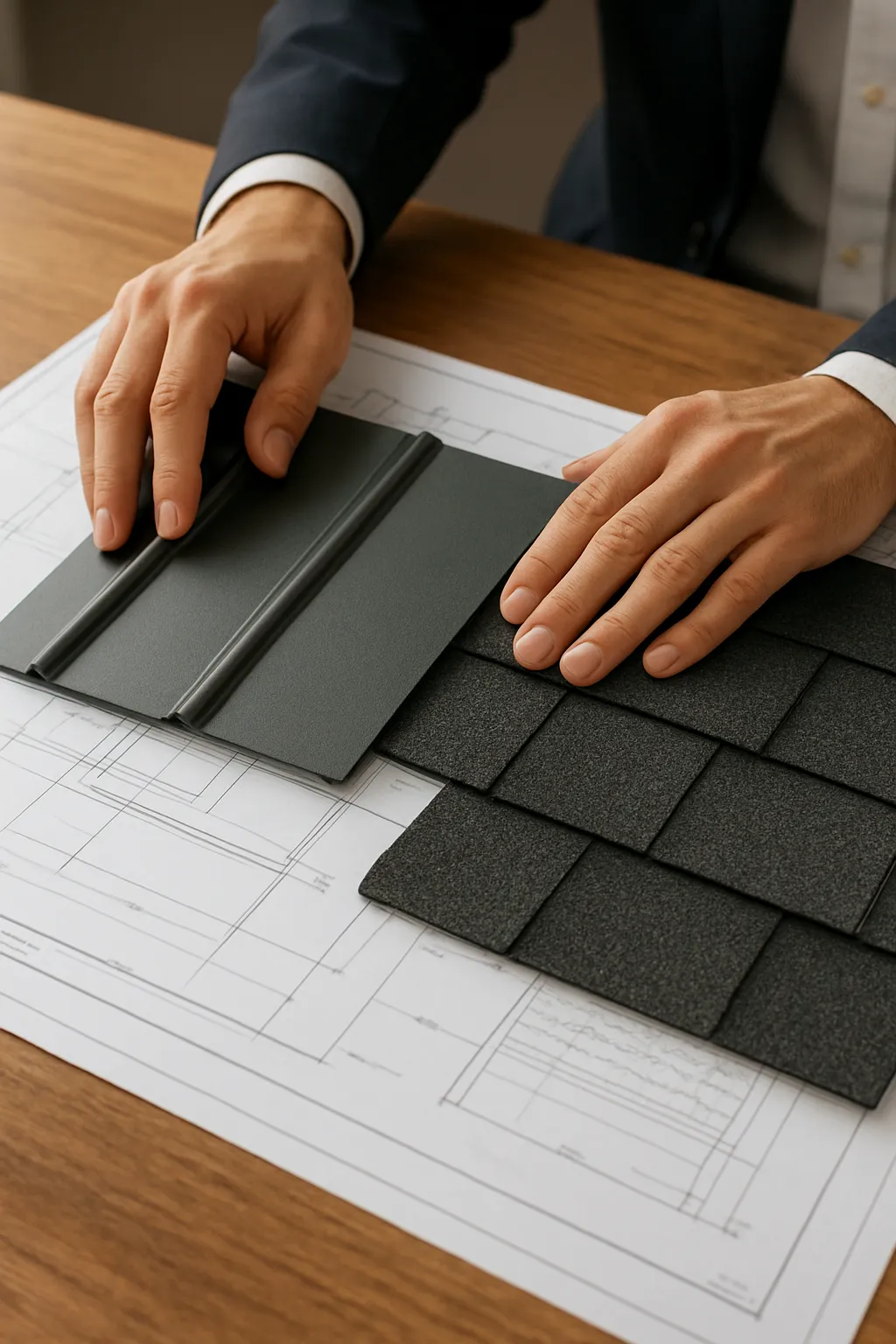
Different roofing materials offer different performance characteristics, appearance, maintenance requirements, and expected service life. Homeowners should consider the property's design, local weather exposure, budget, and long-term plans before making a selection.
Metal roofing, for example, may be appropriate for certain properties where durability and longevity are priorities, while other homes may be better suited to different roofing systems.
| Roofing Material | Expected Service Life | Maintenance Profile | Ideal Property Fit |
|---|---|---|---|
| Architectural Shingles | 20 – 30 Years | Moderate inspection cycles | Standard residential steep-slope roofs |
| Standing Seam Metal | 40 – 70 Years | Low maintenance demand | High weather exposure & modern designs |
| Flat / Membrane Systems | 20 – 30 Years | Regular drainage checks | Commercial & low-slope residential areas |
Plan for the Details Around the Roof
Roof replacement also involves coordinating the areas where the roofing system meets other building components. Flashing around walls, vents, chimneys, skylights, and other penetrations needs to be considered during the planning process.
Gutters and drainage should also be reviewed. A new roof should work properly with the existing water-management system rather than treating the roof surface as an isolated component.
Think About Cost and Long-Term Value
The initial project price is naturally important, but homeowners should also consider expected maintenance, service life, and the potential cost of recurring repairs.
Understanding the average cost of roof replacement can help establish a starting point for budgeting, although the actual cost will vary based on roof size, design, materials, accessibility, preparation, and the scope of required work.
Prepare for the Installation
Once the roofing system and project scope have been established, homeowners should consider how the installation will affect the property. Access, material delivery, protection of landscaping, removal of existing roofing, and weather conditions can all influence the project schedule.
Pre-Site Inspection & Staging
Identify delivery drop points, verify property access, and outline protection plans for landscaping and adjacent structures.
Old Material Tear-Off & Deck Review
Remove legacy roofing down to the decking to repair deteriorated wood and confirm structural integrity.
Underlayment & Flashing Installation
Install high-performance underlayments, ice/water shields, drip edges, and detail penetration flashing.
Surface Assembly & Final Site Cleanup
Lay core roofing materials, complete ridge ventilation details, and perform a full magnetic sweep for debris.
Clear Communication Drives Success: Clear communication with the roofing contractor before work begins can help reduce unnecessary delays and make it easier to address questions as they arise.
A well-planned roof replacement should ultimately provide more than a new finished surface. It should address the condition of the entire roofing system and give the property a reliable foundation for years of continued use.
Frequently Asked Questions
How do I know if I need a full replacement versus a spot repair?
A professional inspection can determine whether issues are localized to flashing and isolated shingles or if widespread deck degradation and moisture penetration necessitate a complete replacement.
How long does a typical roof replacement project take?
Most residential replacements are completed within 1 to 3 days, depending on weather conditions, roof size, material complexity, and necessary deck repairs.